The Australian cabin edit is about the relationship between a small building and its surroundings. A paddock outside the window, the sound of a coastal morning or the shelter of forest can change the whole rhythm of a short break. These researched selections offer different versions of that feeling. They also ask different things of their guests, from compact layouts to more hands-on arrival and household arrangements.
Choose the kind of quiet you want
A coastal cabin invites days shaped by the shoreline; a farm stay makes the property itself a bigger part of the escape. Forest accommodation can feel wonderfully enclosed, while a vineyard address puts open country in the frame. These are alternatives, not interchangeable stops on a single itinerary. Choose a region you can reach comfortably, then compare the cabin's relationship to that landscape. The best short break often involves less distance than the most dramatic saved photograph suggests.
Read the layout as carefully as the view
Small accommodation uses space inventively. Before choosing, establish where the bed, bathroom and kitchen actually sit, whether there are ladders or steep stairs, and what is private. An outdoor bath is a pleasure only if its access and privacy suit you. Ask about heating, cooling and overnight power when these are material to the stay. Off-grid describes a system; it does not tell you how warm, connected or convenient the cabin will feel.
Our selection lens
The places below were chosen for a distinctive setting and a recognisable design idea, rather than a star rating or a claim to be the country's best. Read the individual stay page for its important details and check the provider's current description before booking. Some are deliberately simple; others offer more conventional comforts. A cabin that makes you happy to spend an afternoon indoors is often a stronger choice than one selected entirely for the photograph from its deck.
The stays in this edit
BoxHouse
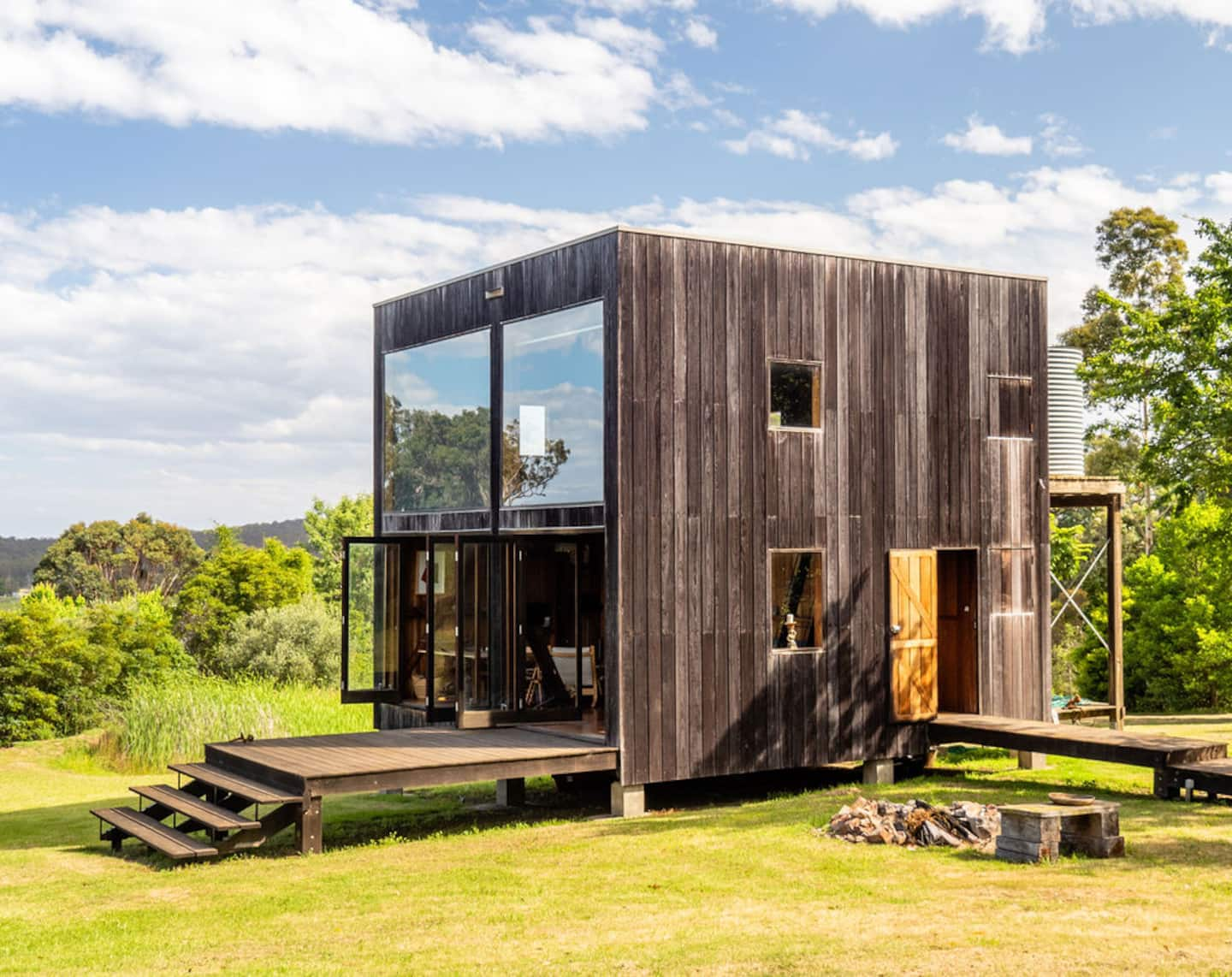
A bold timber retreat that opens to the landscape, with a mezzanine sleeping space and a deliberately simple approach to coastal life.
Hideout 2.0
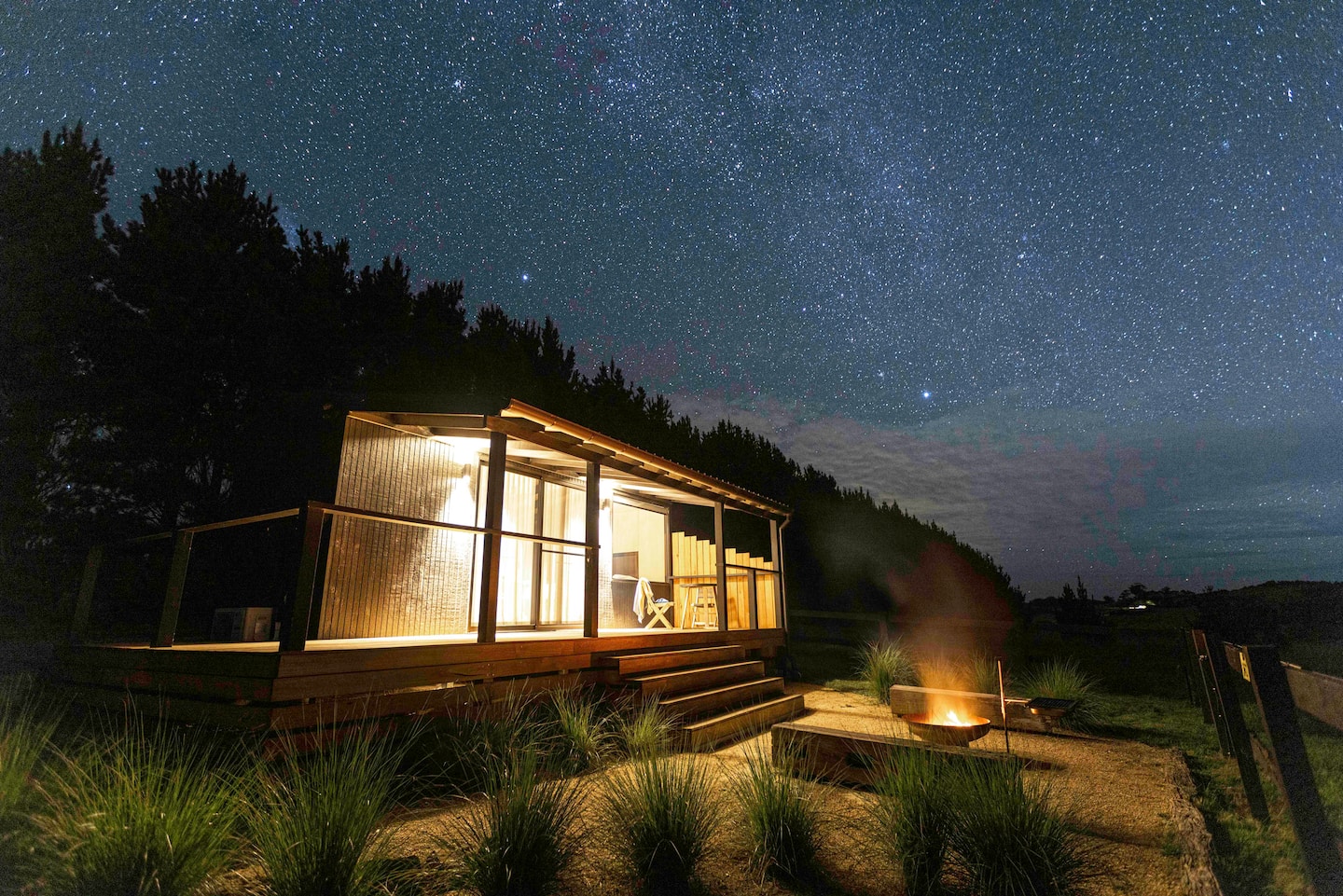
Contemporary tiny-home design on a working horse farm, with pale timber interiors and a sheltered deck looking across open paddocks.
Vineyard Cabin by Outpost
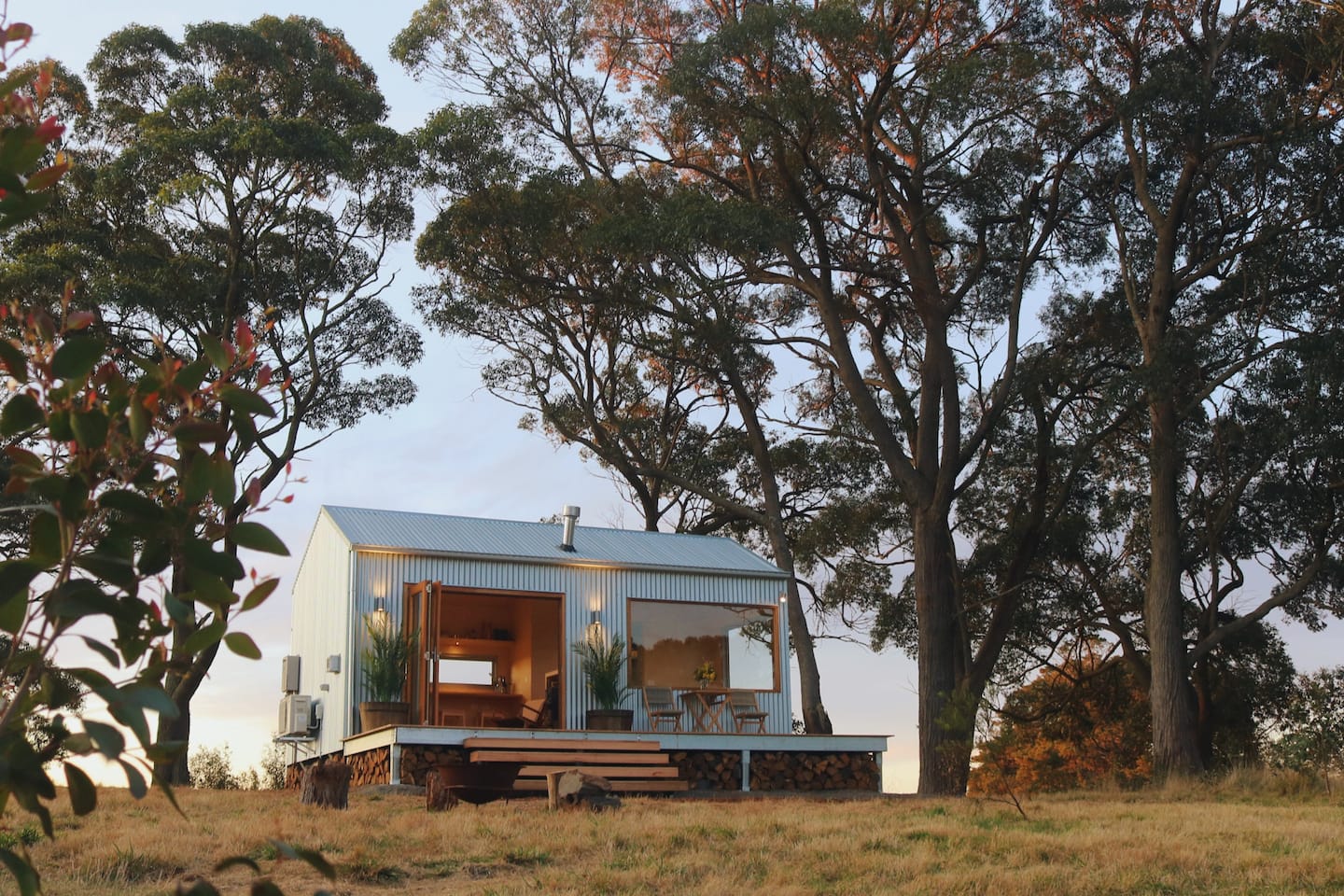
A compact country retreat set within Exeter Vineyard, with paddock views, a private deck and a wood-burning stove for cooler evenings.
Explore Vineyard Cabin by Outpost →
Cosy Bush Cabin
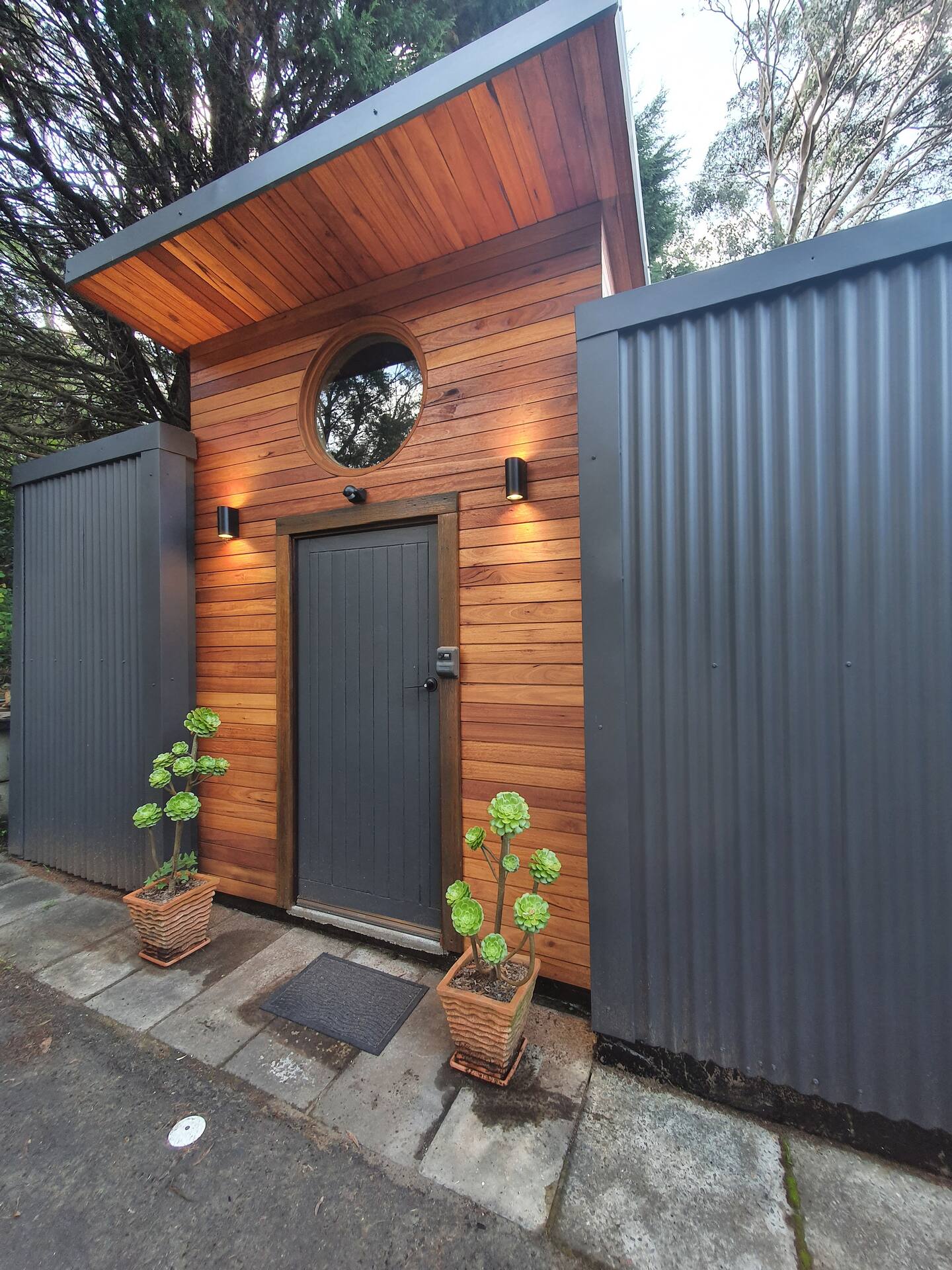
A small, rustic hideaway made from reclaimed materials, with a bush outlook and a private entrance. Full of personality for a slower mountain break.
Bruny Island Hideaway
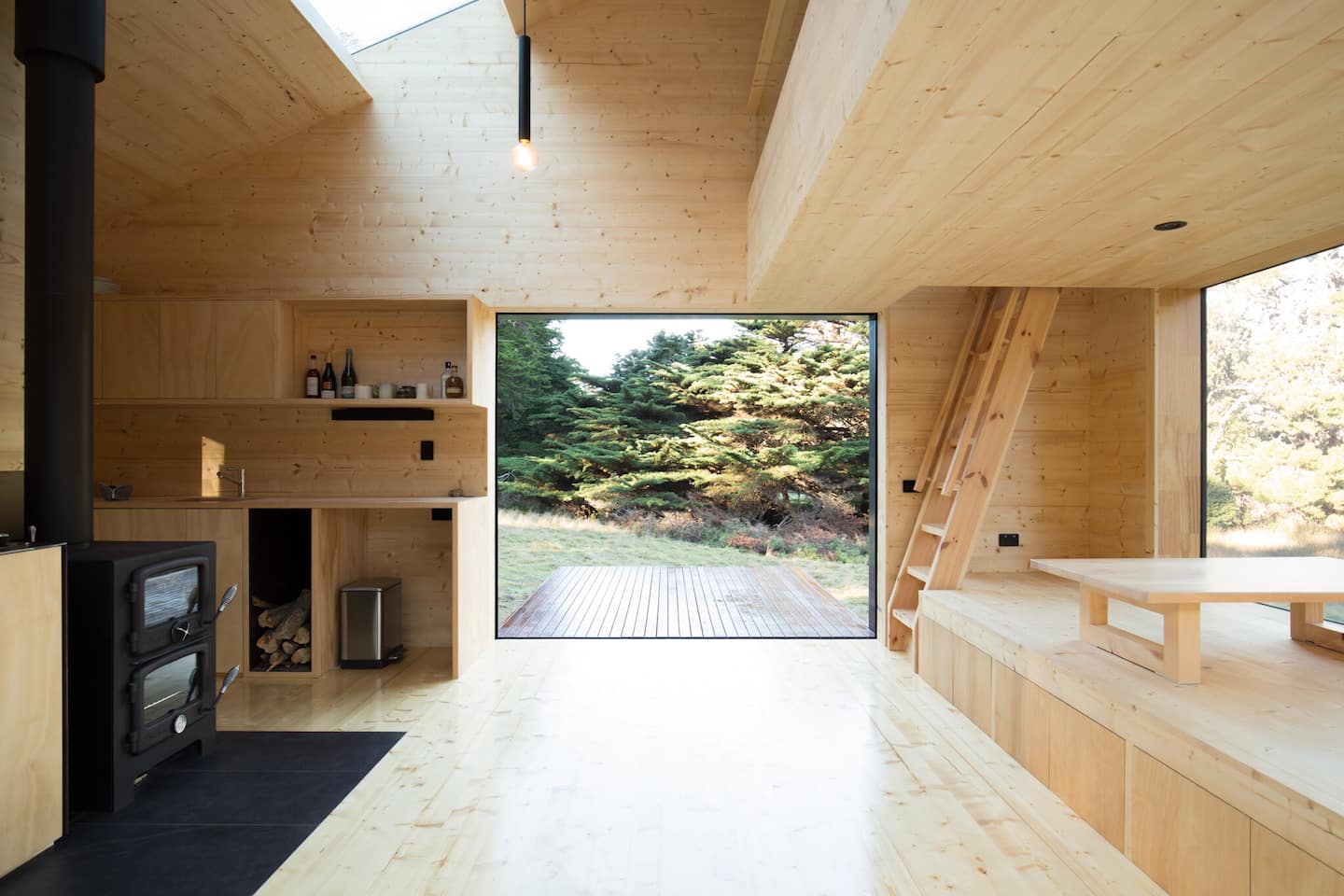
An architect-designed off-grid cabin within conservation forest, with pared-back timber interiors and a strong connection to the bush.
Explore Bruny Island Hideaway →
Questions before you go
Are these cabins all suitable for reduced mobility?
No suitability should be assumed. Ask each provider about parking-to-door access, steps, bathroom design and the sleeping level before reserving.
Can a tiny cabin work for more than two guests?
Sometimes, but the exact permitted occupancy and bed arrangement decide that. Never infer capacity from an outdoor photograph or a broad accommodation label.
Keep exploring
Explore the Australia collection and our destination stays.
Planning sources: australia.com. Check the relevant operator for current access and booking arrangements.