New Zealand treehouse stays range from compact retreats beneath a canopy to larger architectural homes with a cabin atmosphere. The common attraction is a different relationship to the landscape: trees near the windows, a deck that invites a longer breakfast and somewhere you are happy to return early. This small edit spans Rotorua, Queenstown and Taranaki, three separate journeys rather than a route to complete in a weekend.
Three settings, three kinds of holiday
Rotorua can pair a semi-rural stay with forest experiences and local outings. Queenstown adds a lake-and-mountain backdrop and a much wider choice of organised activities. Taranaki offers a different western North Island chapter. Choose the landscape you want to explore first, then work through the accommodation's practical details. A treehouse is most satisfying when you like the place underneath it as much as the building above it.
Look beyond the word treehouse
Some properties are multilevel structures among living trees; others are homes that borrow the feeling of a cabin in a canopy. Look at floor plans and interior photographs. Establish the sleeping level, the bathroom position and the route from parking. Ask whether steps, ladders or exposed decking are involved. A distinctive building can be entirely right for one traveller and a poor fit for another, without either person being less adventurous.
Know what independent living means
An off-grid stay can make for a memorable break, but confirm power, heating, water, cooking facilities and phone reception with the provider. The questions are practical rather than a test of toughness. Decide whether you want to prepare meals, eat out or receive some hosting. If you are travelling in a colder season, the room you will spend the evening in matters more than the summer photograph of its deck.
Choose a comfortable length of stay
Allow more than an arrival night if you want the accommodation to be part of the experience. The time spent packing, finding the property and learning its systems becomes worthwhile when there is an unhurried second morning. For a larger house, check the permitted group size and how the bedrooms relate to one another. For a tiny retreat, consider whether two people can comfortably use the shared indoor space in poor weather.
The stays in this edit
The Cedar Treehouse
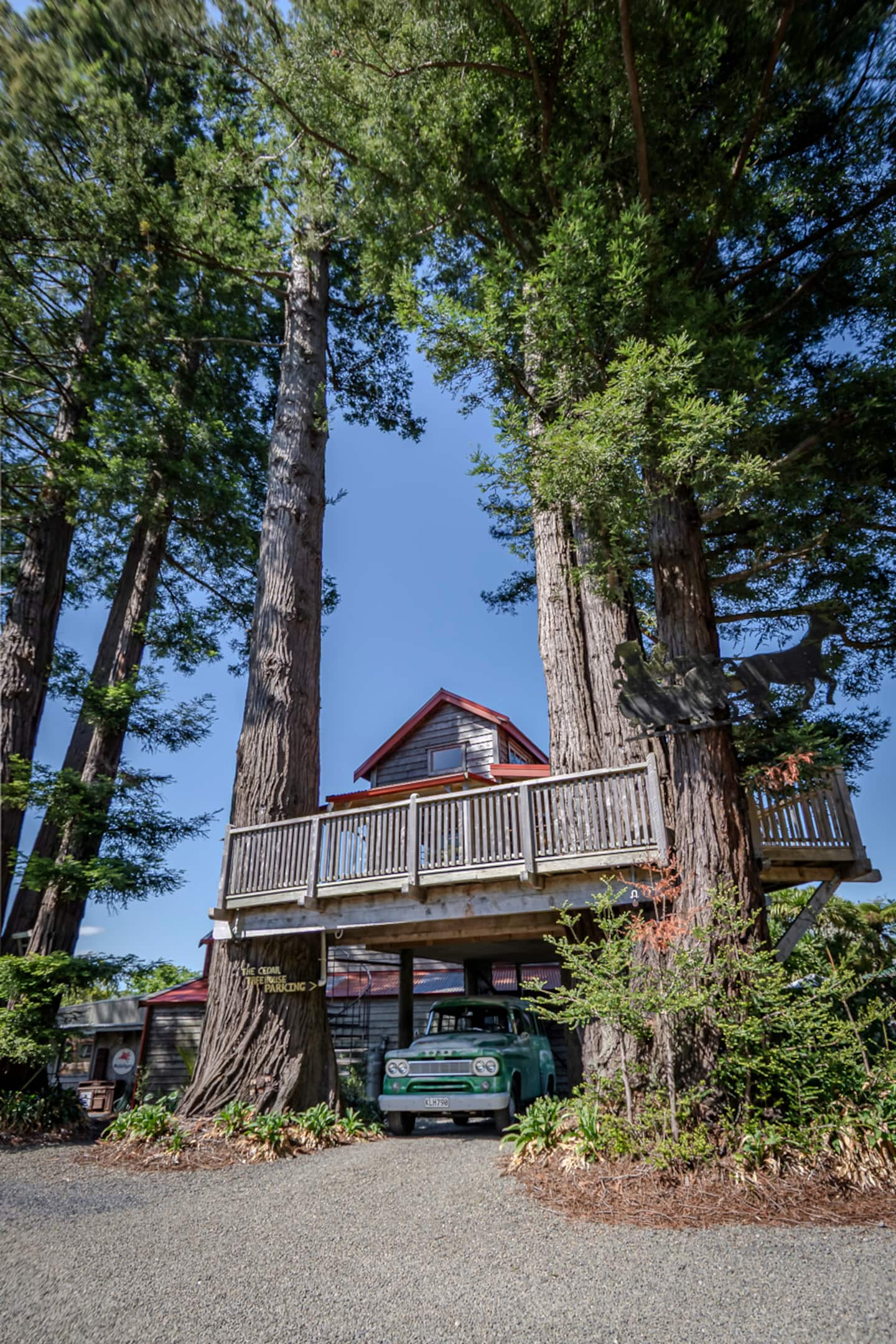
A cedar retreat among mature trees, overlooking a stream on a semi-rural property near Rotorua’s geothermal landscapes.
Queenstown Alpine Treehouse
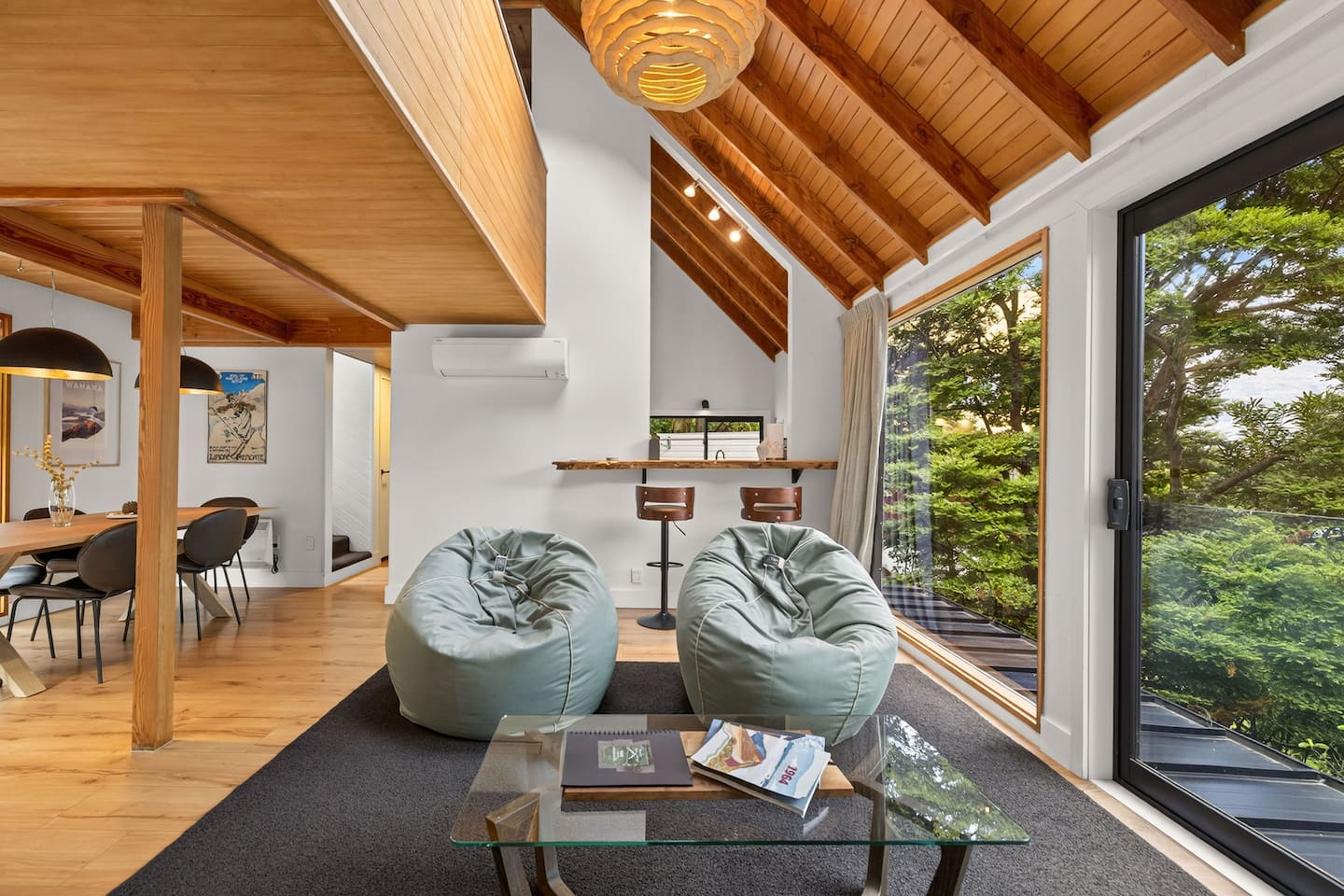
Vaulted timber ceilings and tall windows give this architectural home a cabin feel, with trees close by and lake views from parts of the house.
Explore Queenstown Alpine Treehouse →
The Treehouse Off-grid Retreat
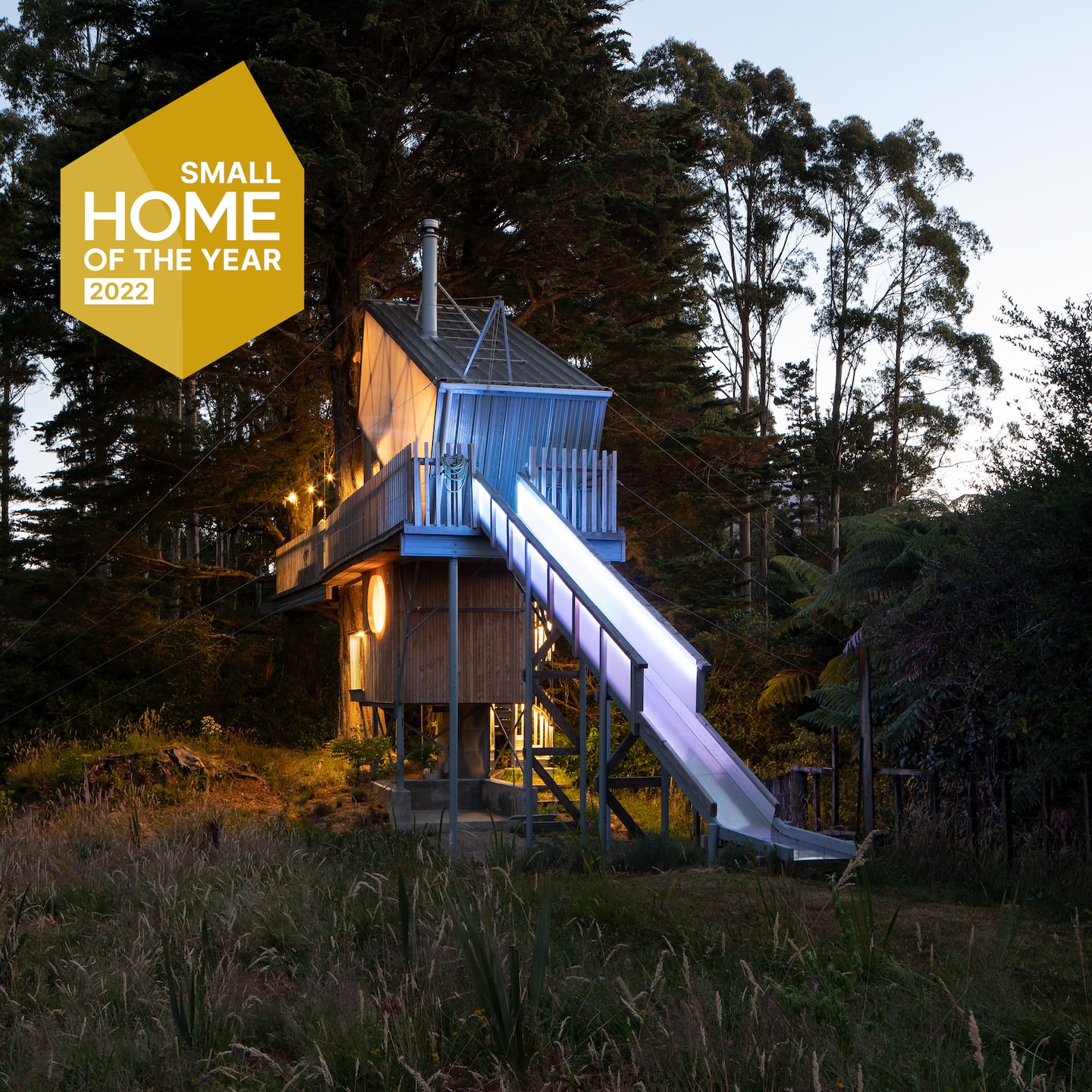
A multilevel treehouse made from repurposed materials beneath a macrocarpa canopy, powered by renewable energy near Taranaki.
Explore The Treehouse Off-grid Retreat →
Questions before you go
Can these three stays be combined easily?
They sit in different parts of New Zealand, including different islands. Treat each as a separate base and plan the wider journey before combining them.
Will a forest setting mean no insects?
No. Ask about screens, ventilation and the practical realities of the property. Nature-connected accommodation should be chosen with realistic expectations.
Keep exploring
Explore the New Zealand collection and our destination stays.
- Four days in Queenstown beyond the activity checklist
- Rotorua forest experiences to pair with a treehouse stay
Planning sources: redwoods.co.nz; queenstownnz.co.nz. Check the relevant operator for current access and booking arrangements.